Belts & Suspenders
Men’s belts and suspenders do more than keep formal trousers comfortably in place—they help the entire suit or tuxedo look finished and properly proportioned. Dress belts in classic black, brown, cognac, white, and ivory work naturally with suit pants and dress shoes, while suspenders provide the traditional solution for tuxedo trousers without belt loops. Whether you’re dressing for a wedding, prom, black-tie event, business occasion, gala, or special celebration, choosing the right option starts with the pants and the level of formality.
Belt or Suspenders: Which Should You Wear?
The trousers usually answer the question for you. Suit pants are commonly designed with belt loops, making a dress belt the natural choice when additional support is needed. Traditional tuxedo pants are generally designed without belt loops, so suspenders provide the more appropriate formal solution.
Browse our formal pants to compare suit trousers and tuxedo pants, or explore our suspenders for additional formalwear options.
Never Wear a Belt & Suspenders Together
A belt and suspenders serve the same basic purpose, so wearing both at once is unnecessary and creates visual clutter around the waist. Choose the option that works with the trouser construction and the formality of the outfit.
With a suit, that will usually mean a belt. With traditional tuxedo trousers, suspenders are generally the better choice.
Dress Belts for Men’s Suits
A clean dress belt finishes the waistline of a suit and creates a visual connection between the trousers and shoes. Black and brown remain the most versatile choices, while cognac provides a warmer, lighter option that works especially well with many navy, blue, grey, tan, and brown suits.
Explore our men’s suits to build the rest of the look around your belt and shoes.
Should Your Belt Match Your Shoes?
For a classic tailored look, keep the belt and shoes within the same general color family. Black shoes are most naturally paired with a black belt, while brown or cognac shoes generally look most cohesive with a brown or cognac belt.
The shades do not need to be perfectly identical, but the closer the color and overall finish feel, the more intentional the outfit will appear.
Browse our men’s formal shoes to coordinate your footwear with the belt.
Black Dress Belts
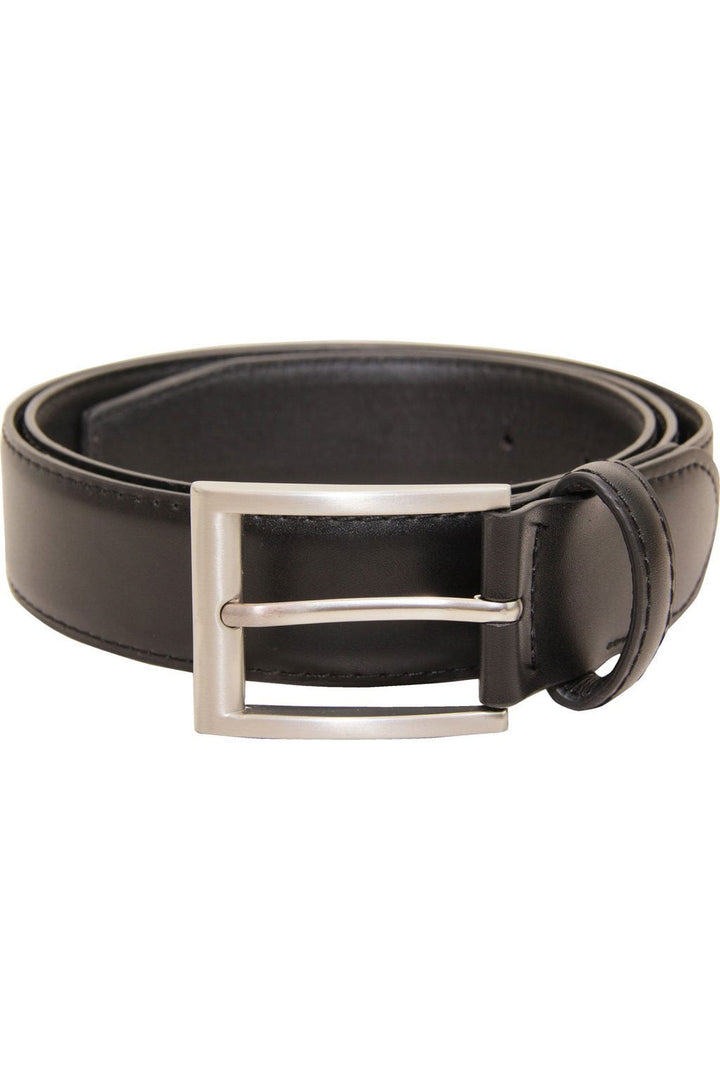
A black dress belt is one of the most useful accessories to own because it pairs easily with black dress shoes and works naturally with black, charcoal, grey, navy, and many other suit colors.
Black is also the easiest choice when you want the belt to remain understated rather than becoming a noticeable part of the outfit.
Brown & Cognac Dress Belts
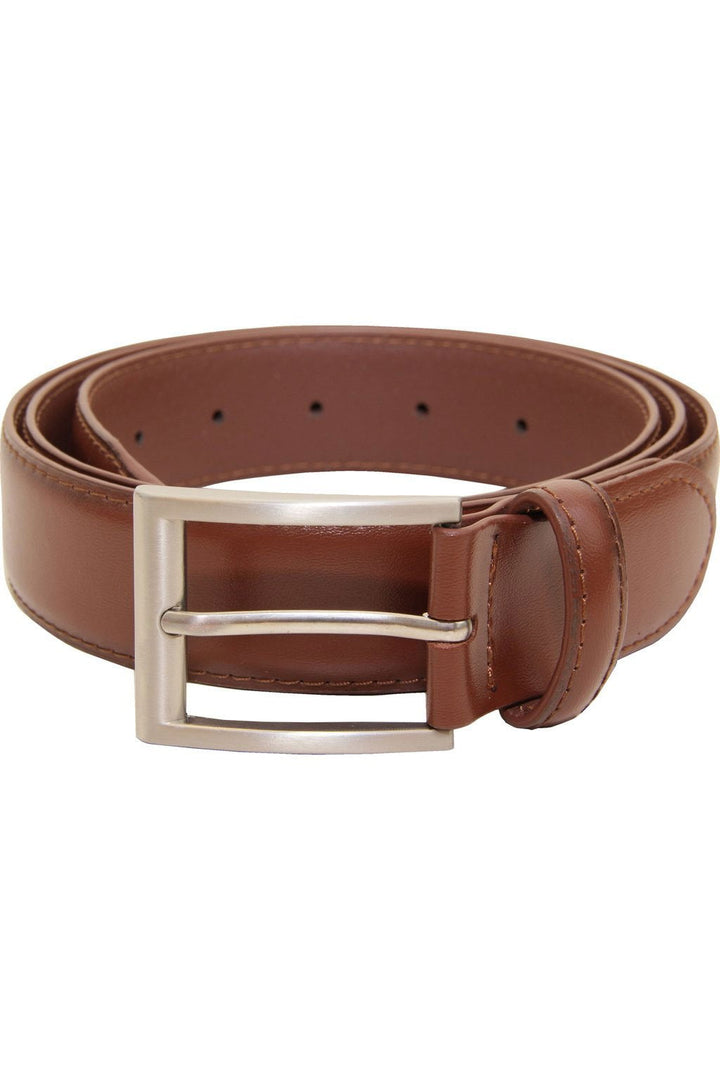
Brown and cognac belts bring warmth to a tailored outfit and are particularly effective with navy, blue, grey, tan, camel, brown, and other earth-tone suits.
Cognac creates more contrast and can make a navy or medium-blue suit feel lighter and more contemporary, while darker brown tends to create a quieter, more traditional combination.
For complementary formalwear, explore our blue suits and tuxedos, tan suits and tuxedos, and brown suits and tuxedos.
White & Ivory Dress Belts
White and ivory belts serve a more specialized styling role and can work with lighter formalwear, fashion-forward outfits, themed events, and occasions where the belt is intentionally coordinated with the surrounding colors.
Because light belts draw more attention than black or brown, consider how they relate to the shoes, trousers, shirt, and overall outfit rather than treating them as interchangeable neutrals.
How Wide Should a Dress Belt Be?
Formal belts should generally have a cleaner, narrower profile than casual belts designed for jeans or workwear. That keeps the belt proportional to tailored trousers and prevents the waistband from looking bulky.
Several current BlackTie dress belts use a 3.5 cm width with a simple single-prong buckle, creating a streamlined profile suitable for formal trousers.
How Should a Dress Belt Fit?
A dress belt should fasten comfortably around the waist without needing to be pulled excessively tight. Ideally, you should have enough adjustment available that the buckle sits naturally and the belt does not create bunching around the waistband.
Sizing varies by style. For example, BlackTie’s current Black Dress Belt is available across a broad waist range, while the Alvin belt collection extends into larger sizes. Check the sizing listed on the individual product rather than assuming every belt follows the same scale.
What Size Belt Should You Buy?
Start with your actual trouser waist rather than relying only on the number printed on another belt you already own. Belt sizing can vary by manufacturer, and some styles identify both the nominal belt size and the waist range it is designed to fit.
When in doubt, compare your waist measurement with the size range shown on the individual belt page before ordering.
Do You Wear a Belt With a Tuxedo?
Traditional tuxedo trousers are generally made without belt loops, and a belt is not part of classic black-tie dressing. The clean waistline is intentional and helps distinguish tuxedo trousers from conventional suit pants.
If additional support is needed, suspenders are the more traditional choice.
Browse our men’s tuxedos for complete formal eveningwear options.
Why Wear Suspenders With a Tuxedo?
Suspenders support the trousers from the shoulders rather than tightening the waist. This allows tuxedo pants to sit at the intended height without adding the visible buckle and belt loops associated with a suit.
That clean waistline is especially useful with traditional black-tie styling, where the shirt, cummerbund or vest, trousers, and jacket are meant to create one continuous formal silhouette.
Solid vs. Grosgrain Suspenders
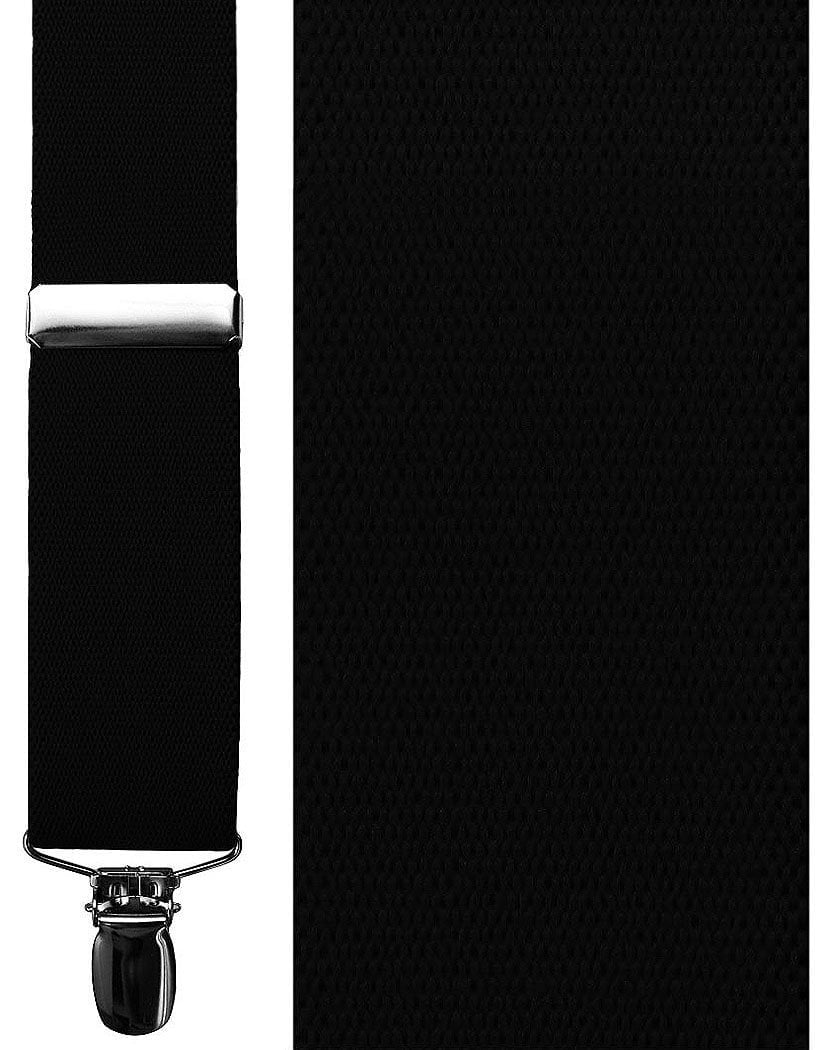
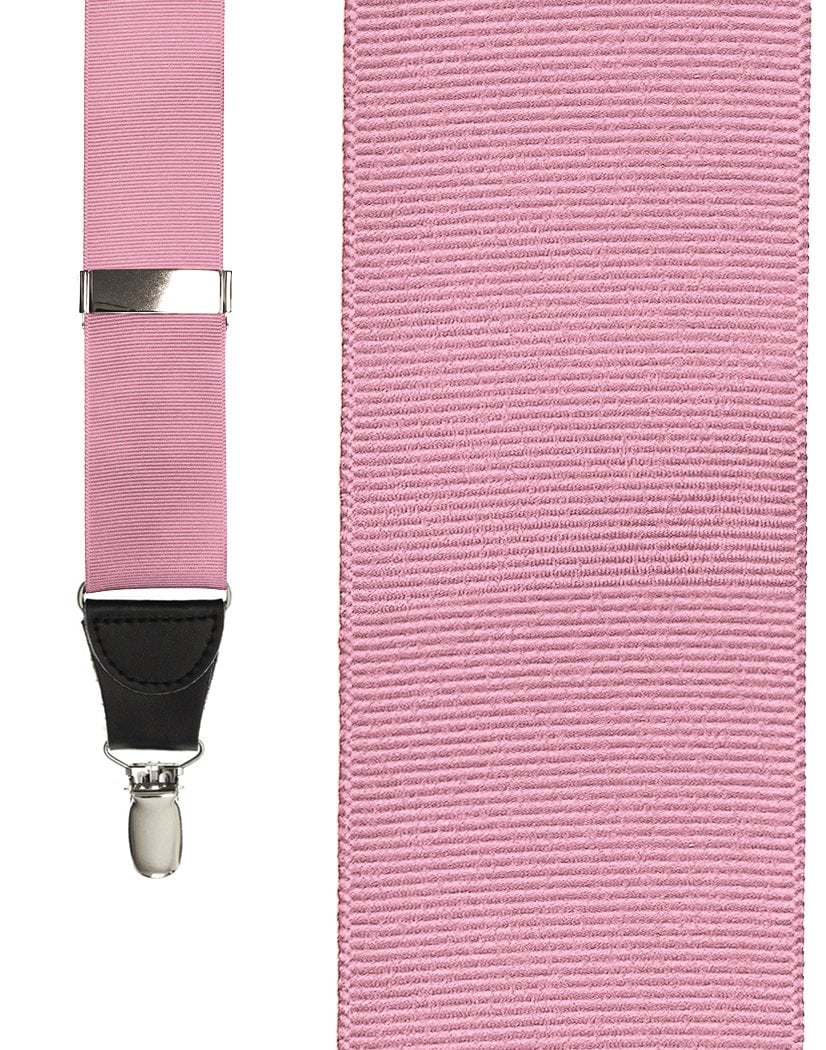
Solid suspenders provide the simplest approach and work well when you want the support to remain understated. Grosgrain styles introduce a subtle ribbed texture that can feel particularly appropriate alongside tuxedo fabrics and other formal accessories.
BlackTie offers both solid and grosgrain suspender options, including multiple colors for weddings, prom, and other events where the suspenders may become visible later in the evening.
Black Suspenders for Traditional Formalwear
Black suspenders are the easiest choice with a classic black or midnight-blue tuxedo because they remain visually quiet beneath the jacket and coordinate naturally with black formal trousers.
They can also be worn beneath a vest or cummerbund, allowing the supporting accessory to do its job without becoming the focal point of the outfit.
Colored Suspenders for Weddings & Special Events
Suspenders do not always have to disappear beneath the jacket. For weddings, prom, and less traditional formal events, colored suspenders can become part of the outfit once the jacket comes off.
That creates another opportunity to introduce a wedding color or coordinated accent while keeping the suit or tuxedo itself relatively neutral.
Can You Wear Suspenders With a Suit?
Yes. Suspenders are not limited to tuxedos. They can be worn with a suit when you prefer the way they support the trousers or want to create a more distinctive tailored look.
If the suit trousers also have belt loops, simply leave the belt off when wearing suspenders. The two should not be worn together.
Can You Wear Suspenders With a Cummerbund?
Yes. Suspenders can be worn beneath a cummerbund because the two accessories serve different purposes. The suspenders support the trousers, while the cummerbund provides the traditional formal waist covering between the shirt and tuxedo pants.
Browse our cummerbunds for classic black and coordinating formalwear options.
Can You Wear Suspenders With a Vest?
Yes. Suspenders can also be worn underneath a formal vest. This keeps the suspenders largely hidden while allowing them to support the trousers throughout the event.
The vest then creates the finished outer layer at the waist and torso, which is particularly useful at weddings and receptions when the jacket may eventually come off.
Explore our formal vests for coordinating options.
Belts for Weddings
For wedding suits, establishing one belt-and-shoe color for the entire wedding party is an easy way to create consistency. Black belts and shoes provide a classic option, while brown or cognac can bring more warmth to navy, grey, tan, brown, and other suit colors.
Browse our Wedding Suits and Groomsmen Suits to build the rest of the wedding-party look.
Should the Groom & Groomsmen Wear the Same Belt?
They do not necessarily need the exact same belt, but keeping the belt and shoe colors consistent across the group creates a cleaner appearance in photographs.
If the groom needs a different belt size or prefers another buckle style, staying within the same black, brown, or cognac color family can preserve the coordinated look without requiring every accessory to be identical.
Suspenders for Weddings
Suspenders can be particularly useful for tuxedo wedding parties because they provide trouser support without interfering with the clean formal waistline. They can remain discreet beneath the jackets during the ceremony and become part of the look later at the reception.
Explore our Wedding Tuxedos and Groom Tuxedos for complete wedding formalwear.
Suspenders for Prom & Homecoming
Prom gives suspenders a little more freedom to become part of the style. Black keeps things classic, while colored suspenders can coordinate with a bow tie, necktie, pocket square, date’s outfit, or another color in the formalwear.
They are also a practical accessory later in the evening when the jacket comes off and the suspenders become more visible.
Browse our Prom & Homecoming collection for complete prom and formal-dance looks.
Belts & Suspenders for Galas and Formal Events
For a suit worn to a formal dinner or special event, a clean dress belt that coordinates with the shoes creates a polished finish. For traditional tuxedo attire, skip the belt and use suspenders if trouser support is needed.
Explore our Galas & Special Events collection for additional formalwear.
What About Black Tie?
Traditional black-tie dressing uses tuxedo trousers without a belt. If the trousers need support, suspenders are worn discreetly beneath the jacket and any waist covering.
That means the belt-and-shoe matching rule that applies to suits does not apply to a traditional tuxedo. Instead, pair the tuxedo with polished black formal shoes and keep the waistline clean.
Coordinate the Belt, Shoes & Socks
With a suit, think of the belt and shoes as one connected part of the outfit. Once those colors are established, choose socks that work naturally with the trousers rather than introducing an unrelated contrast unless the event specifically calls for more personality.
Complete the lower half of your outfit with our formal shoes, dress socks, and formal trousers.
Choose the Accessory That Fits the Pants
The simplest rule is also the most useful: let the trousers determine whether you need a belt or suspenders. Suit pants with belt loops work naturally with a dress belt, while traditional tuxedo trousers without belt loops are designed to maintain a cleaner waistline and can be supported with suspenders.
Whether you choose a black belt with matching dress shoes, a warm cognac combination for a navy suit, or understated suspenders beneath a tuxedo, the right accessory should keep the trousers comfortably in place while supporting the formality and overall proportions of the outfit.