Getting invited to a black-tie wedding? Whether you're the groom, a groomsman, or a guest, understanding the black tie dress code wedding requirements can feel overwhelming. Don't worry: we're here to break it down in simple terms so you look sharp without the stress.
The black tie dress code wedding standard has evolved over the years, but the core principles remain the same: elegance, sophistication, and respect for tradition. Let's dive into everything you need to know to nail this formal dress code.
What "Black Tie" Really Means Today
Black tie originated in the 1860s as a more relaxed alternative to white tie (the most formal dress code). What started as "dinner dress" for gentlemen has become the gold standard for elegant evening events, especially weddings.
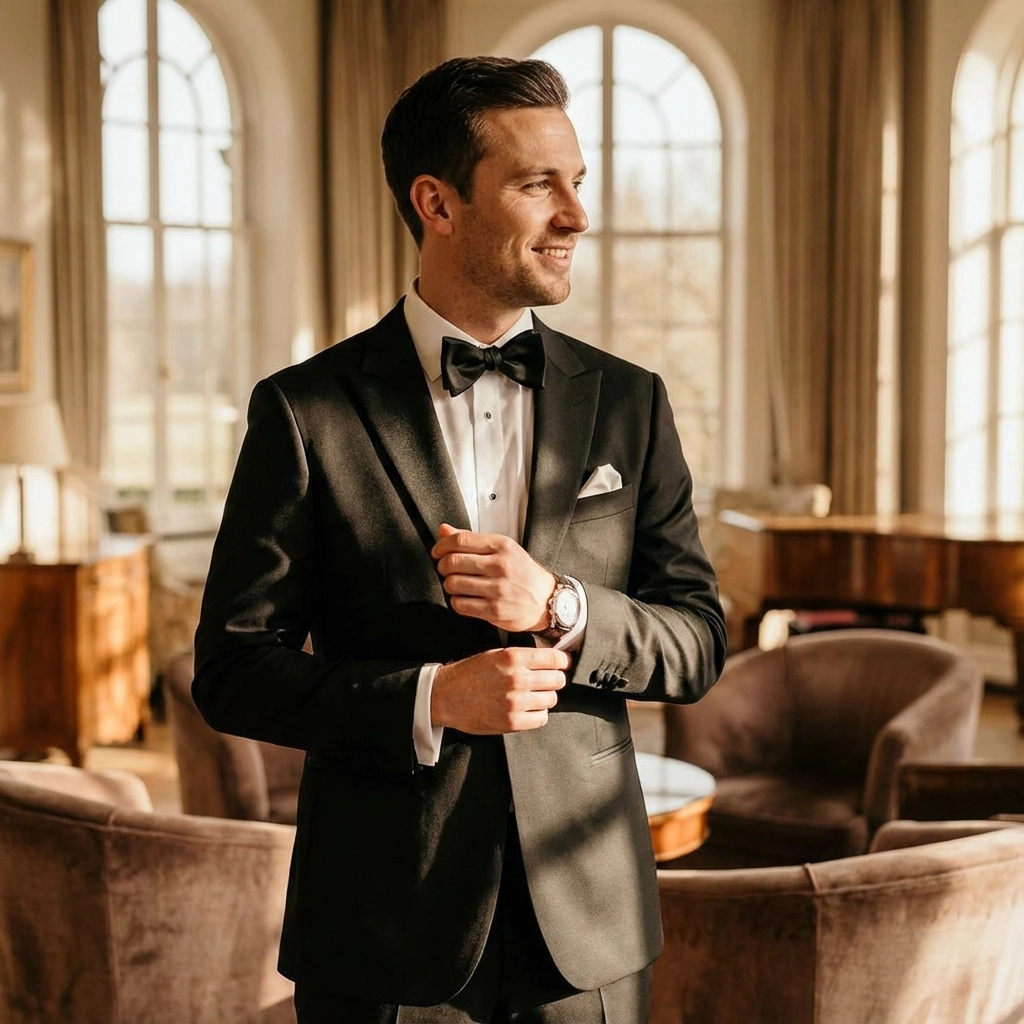
Today's black tie dress code wedding interpretation maintains the classic elements while allowing for slight modern touches. The essentials haven't changed: a tuxedo jacket, formal trousers, dress shirt, bow tie, and proper dress shoes. However, modern weddings might offer a bit more flexibility in fabric textures, lapel styles, or even subtle color variations.
The key is understanding that black tie means "formal evening wear": this isn't the time for a regular business suit or creative interpretations. When a couple specifies black tie for their wedding, they're asking for a specific level of formality that honors their special day.
Black-Tie Wedding Checklist for Men
The Tuxedo Jacket & Pants
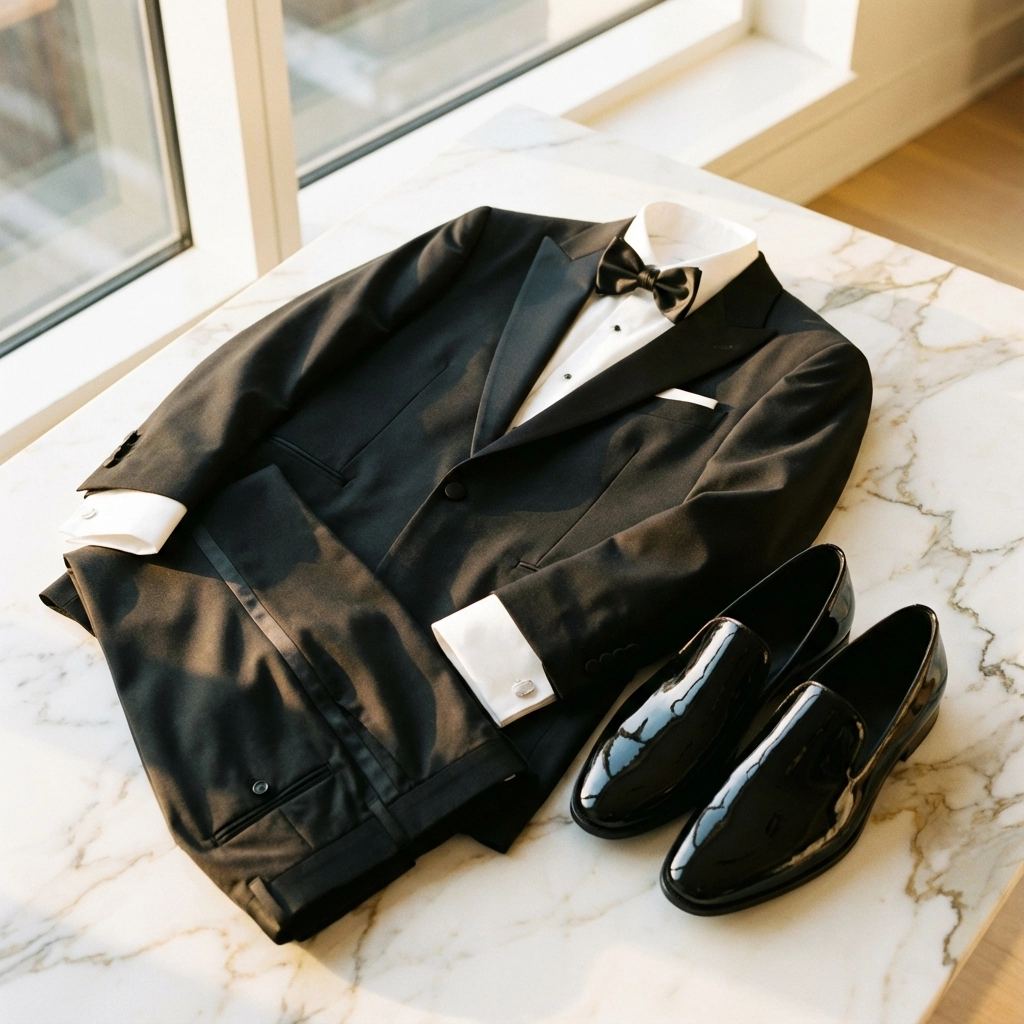
Your foundation starts with a proper tuxedo. Unlike a regular suit, a tux features satin details on the lapels, buttons, and trouser stripe. You'll want to choose between:
Single-breasted vs Double-breasted: Single-breasted jackets are more versatile and easier to wear, while double-breasted styles offer a more dramatic, vintage-inspired look.
Peak lapel vs Shawl lapel: Peak lapels (pointing upward) create a sharp, modern silhouette, while shawl lapels (rounded) offer a softer, classic appearance. Both work perfectly for black tie wedding outfit men.
Your tuxedo jackets should fit impeccably through the shoulders and chest. Popular modern options like the Kingston, London, or Vermont styles offer contemporary cuts while maintaining traditional elegance.
Match your jacket with proper tuxedo pants: high-waisted, without belt loops, and featuring that distinctive satin stripe down the outer seam.
The Formal Shirt
Your dress shirt deserves careful attention. Look for:
- White color only (this is non-negotiable for black tie)
- Wingtip vs Spread collar: Spread collars are more modern and versatile, while wingtip collars are traditional but can look dated
- Pleated vs Plain front: Both work, but pleated fronts add texture and formality
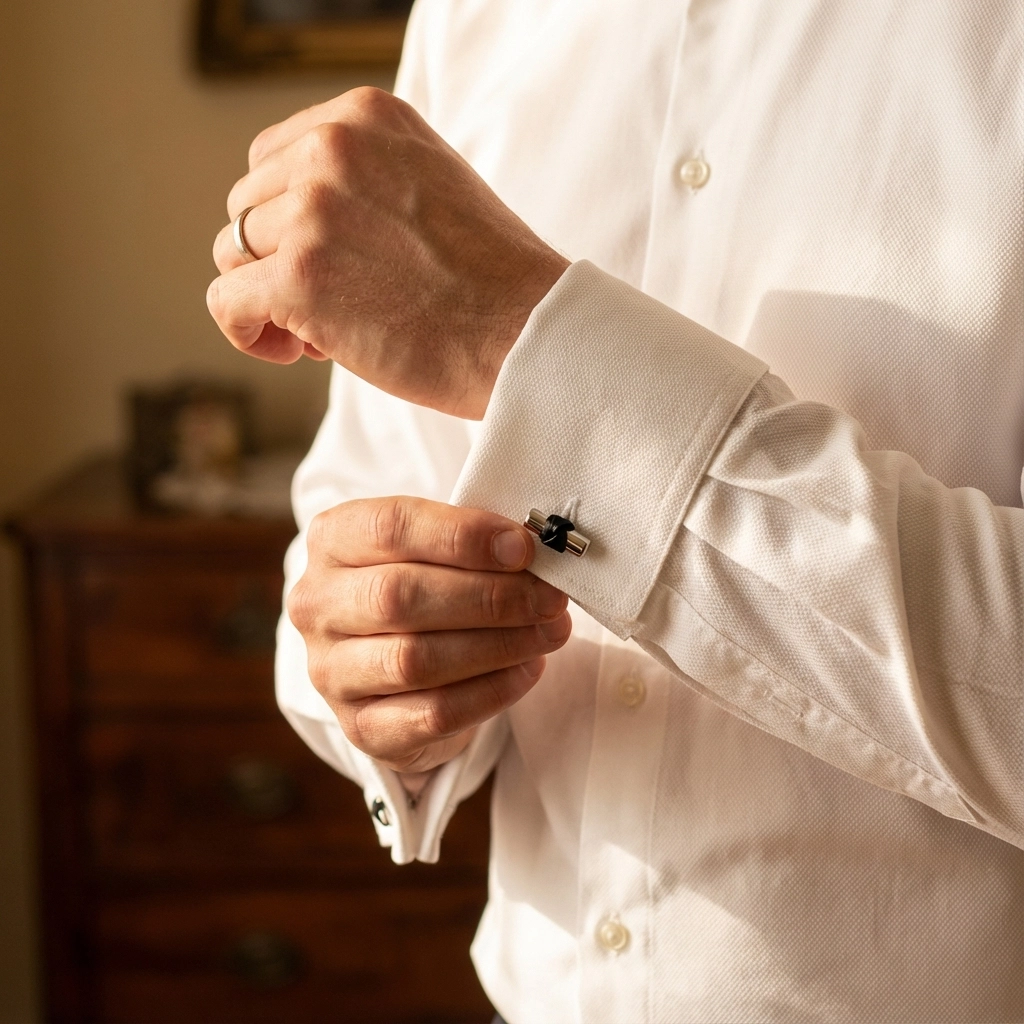
- French cuffs requiring cufflinks (essential for the black tie look)
Bow Tie, Cummerbund or Vest
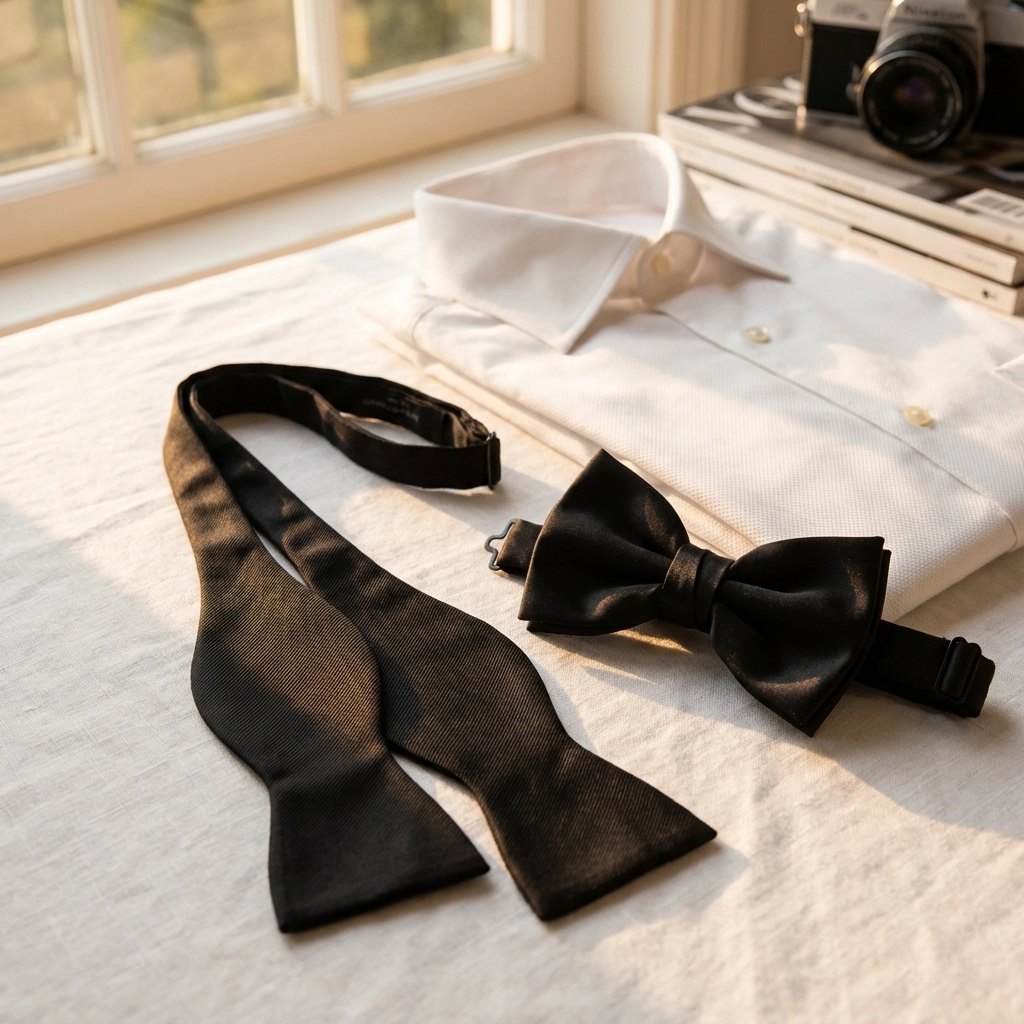
A black bow tie is absolutely essential: no exceptions. Skip the clip-on and go for a proper self-tie or pre-tied version in silk.
You'll also need either a cummerbund or vest to cover your shirt's waistband. Cummerbunds are traditional and streamlined, while vests offer more coverage and can help distinguish the groom from his party.
Shoes, Socks & Finishing Touches
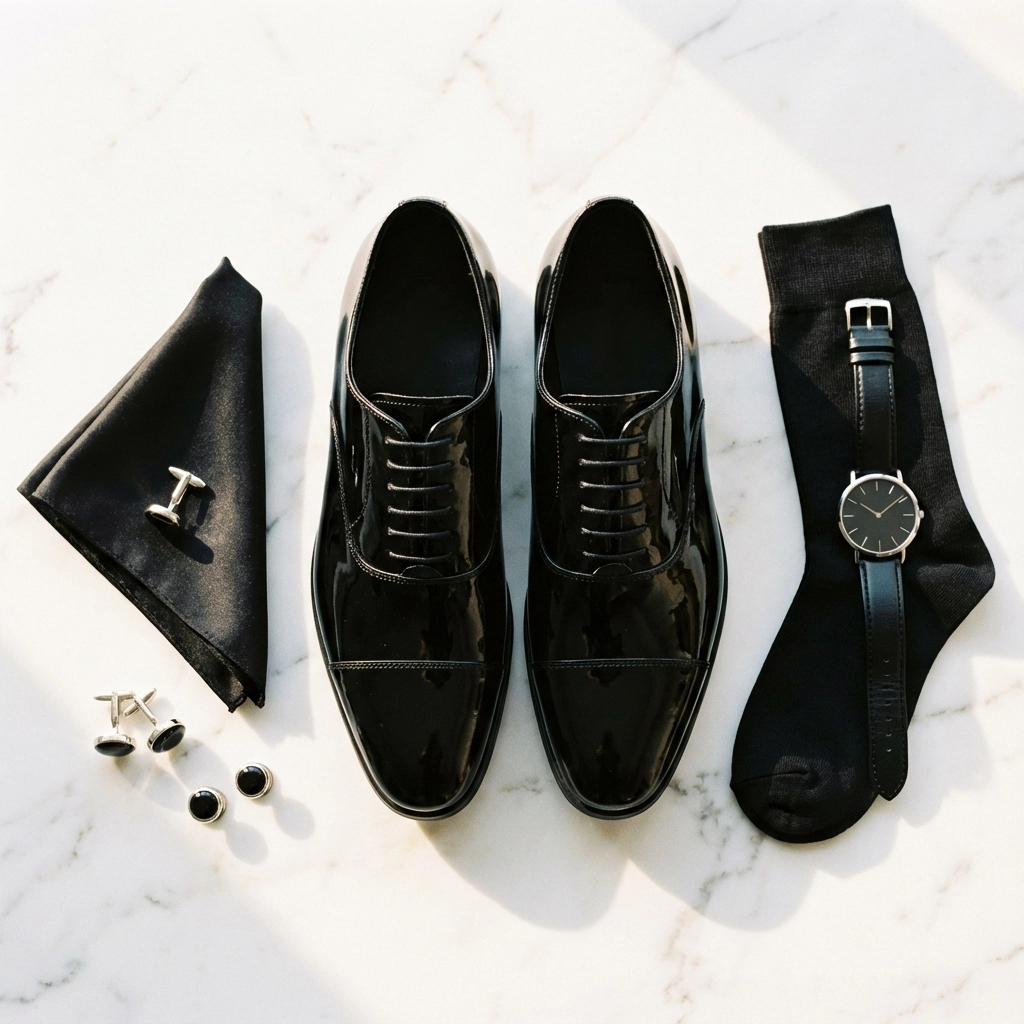
Complete your look with proper formal footwear: black patent leather or high-quality black leather oxfords. Skip the brogues or anything with excessive detailing.
Don't forget the accessories that tie everything together: cufflinks and studs, a pocket square, and black dress socks.
Black Tie vs "Formal" vs "Black Tie Optional"
Understanding what is black tie attire versus other formal dress codes can save you from awkward outfit choices:
Black Tie: Full tuxedo required. No regular suits, no creative interpretations. This is the most formal option short of white tie.
Formal/Black Tie Preferred: A tuxedo is strongly encouraged, but a very dark, well-tailored suit might be acceptable. When in doubt, go with the tux.
Black Tie Optional: You can wear either a tuxedo or a dark suit. However, if it's an evening wedding at an upscale venue, a tux is still the better choice.
Cocktail/Semi-Formal: A dark suit is appropriate, but a tuxedo would be overdressed.
The safe rule? When a couple cares enough to specify black tie dress code wedding requirements, they want to see tuxedos. Don't risk being underdressed on their special day.
Common Black-Tie Mistakes (and How to Avoid Them)
Even well-intentioned guys make these black tie blunders:
Wearing a regular suit instead of a tux: The satin details on a tuxedo aren't just decorative: they're what makes it formal evening wear. A black business suit doesn't cut it.
Wrong shoes: Brown shoes, chunky sneakers, or casual loafers completely undermine your formal look. Stick to black patent leather or polished black oxfords.
Loud accessories that clash: Your pocket square doesn't need to match your bow tie exactly, but avoid neon colors or busy patterns that compete with the bride.
Poor fit: Nothing ruins a tuxedo like sleeves that are too long, pants that pool at your ankles, or a jacket that's too tight. Professional tailoring is worth every penny.
Forgetting the details: Clip-on bow ties, mismatched metals on cufflinks and studs, or colored socks all signal that you don't understand the dress code.
How to Make Your Black-Tie Look Feel Personal
Black tie doesn't mean boring. Here are subtle ways to add personality while respecting the black tie vs formal distinction:
Subtle texture on the tux: Velvet lapels, textured fabrics, or unique button details can set you apart without breaking rules.
Studs and cufflinks: Choose pieces with interesting details, colored stones, or family heirloom pieces that tell your story.
Pocket square choices: A white pocket square is always safe, but you can experiment with subtle colors or textures that complement your overall look.
Matching or coordinating with the bridal party: If you're the groom, consider how your specific choices (vest vs. cummerbund, lapel style) will distinguish you from your groomsmen while maintaining cohesion.
The key is making thoughtful choices within the traditional framework, not reinventing the entire look.
Should You Buy or Rent a Tux for a Black-Tie Wedding?
This decision comes down to frequency, fit, and budget:
Consider buying when you:
- Attend multiple formal events per year
- Are getting married (you'll want perfect fit and quality)
- Value long-term quality and cost-per-wear
- Want the confidence that comes with a perfectly fitted, owned tuxedo
Renting might work when you:
- Only need formal wear occasionally
- Are working with a tight budget
- Don't want to worry about storage or maintenance
However, consider this: a quality tuxedo from BlackTie.com is an investment in looking your best for years to come. The superior fit, fabric quality, and convenience of having your own formal wear often makes buying the smarter long-term choice, especially for grooms who want to look perfect on their wedding day.
Final Tips So You Don't Stress on the Big Day
Try on everything weeks before the wedding: Don't wait until the last minute to discover fit issues or missing pieces.
Get tailoring done early: Good tailors get busy, especially during wedding season. Book your fitting appointments well in advance.
Have backup pieces on hand: An extra bow tie, shirt studs, or even a backup dress shirt can save the day if something goes wrong.
Take care of your tuxedo: Whether you buy or rent, treat your formal wear with respect. Use proper garment bags for transport and storage.
Practice tying your bow tie: If you're going with a self-tie bow tie, practice at home so you're not fumbling in the mirror on wedding morning.
Remember, the black tie dress code wedding standard exists to ensure everyone looks their absolute best for one of life's most important celebrations. When you nail the details, you're not just following rules: you're showing respect for the couple and contributing to the elegance of their special day.
Whether you're saying "I do" or simply celebrating those who are, proper black tie attire ensures you'll look back on the photos with pride, knowing you rose to the occasion with style and sophistication.