Brown Vests
Brown vests offer more than one route to a coordinated outfit. A matching waistcoat can complete a three-piece suit, while a textured or satin accessory vest can introduce a warm accent beneath a different jacket. This collection includes Metro, Windsor, Embassy, and tweed designs alongside Tapestry, Herringbone, Luxury Satin, and other accessory ranges. Start by deciding which role the vest will play.
Match a Suit or Add Contrast
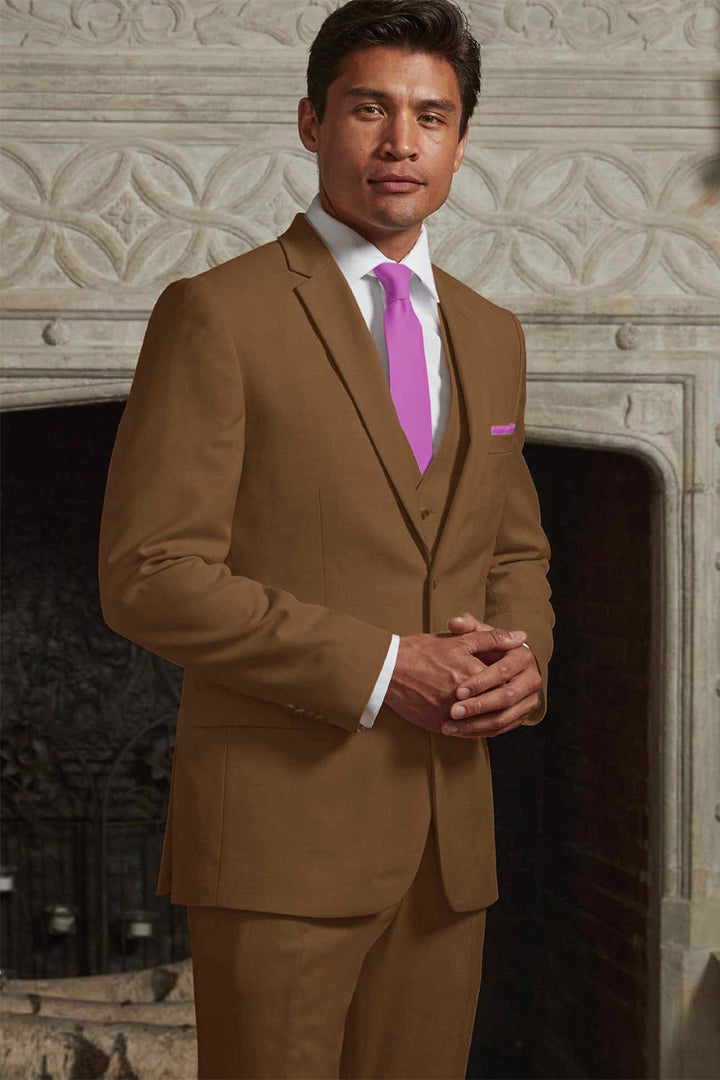
For a three-piece suit, the simplest route is a vest intended to coordinate with the chosen jacket and trousers. Compare brown suit separates and follow the product’s matching recommendations. Similar names such as chocolate or cocoa do not establish that two fabrics are the same.
A contrasting vest can also work, particularly when its texture makes the difference look deliberate. Consider a patterned or woven waistcoat against a quieter jacket, then keep the shirt and neckwear controlled. The contrast should appear planned rather than the result of trying unsuccessfully to match two close shades.
Understanding the Brown Palette
Deep chocolate and espresso create a different mood from cognac, latte, camel, and tan. The collection spans several of these tones, with both suiting and accessory fabrics. View the vest with the other clothing you intend to wear; a warm brown can appear quite different beside cool grey than beside ivory.
Use the brown formalwear hub to plan the palette across the outfit. For weddings, compare reference fabrics rather than relying only on a color name supplied by another vendor. Where available, brown fabric swatches can help you assess the actual finish in daylight and indoor lighting.
Texture Changes the Effect
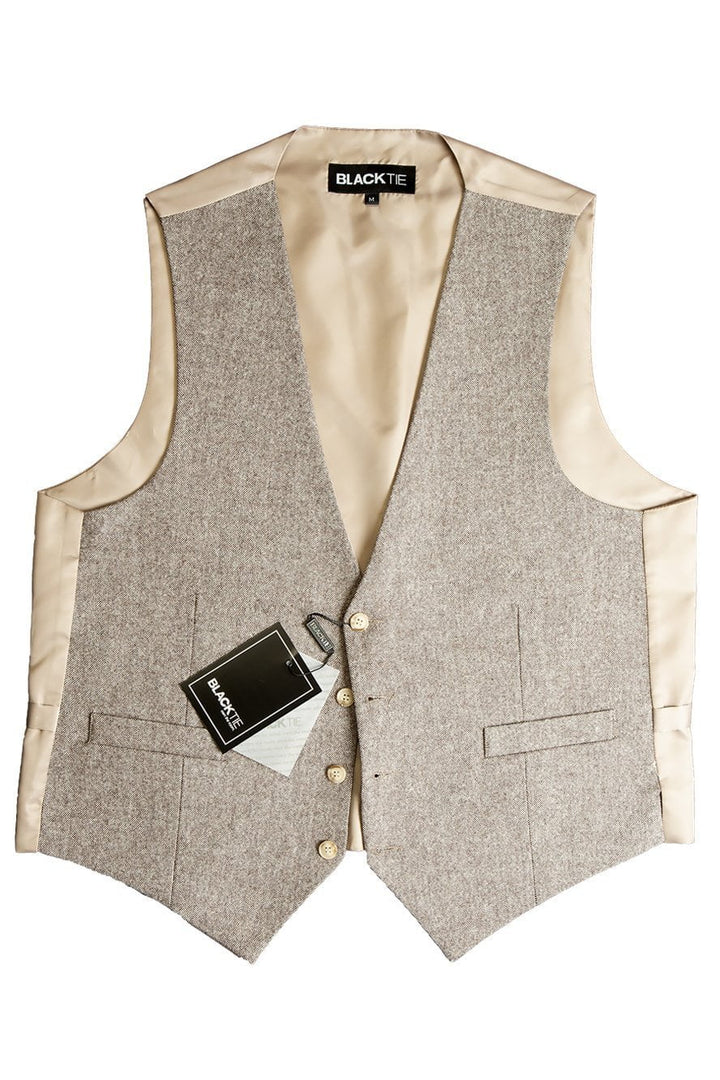
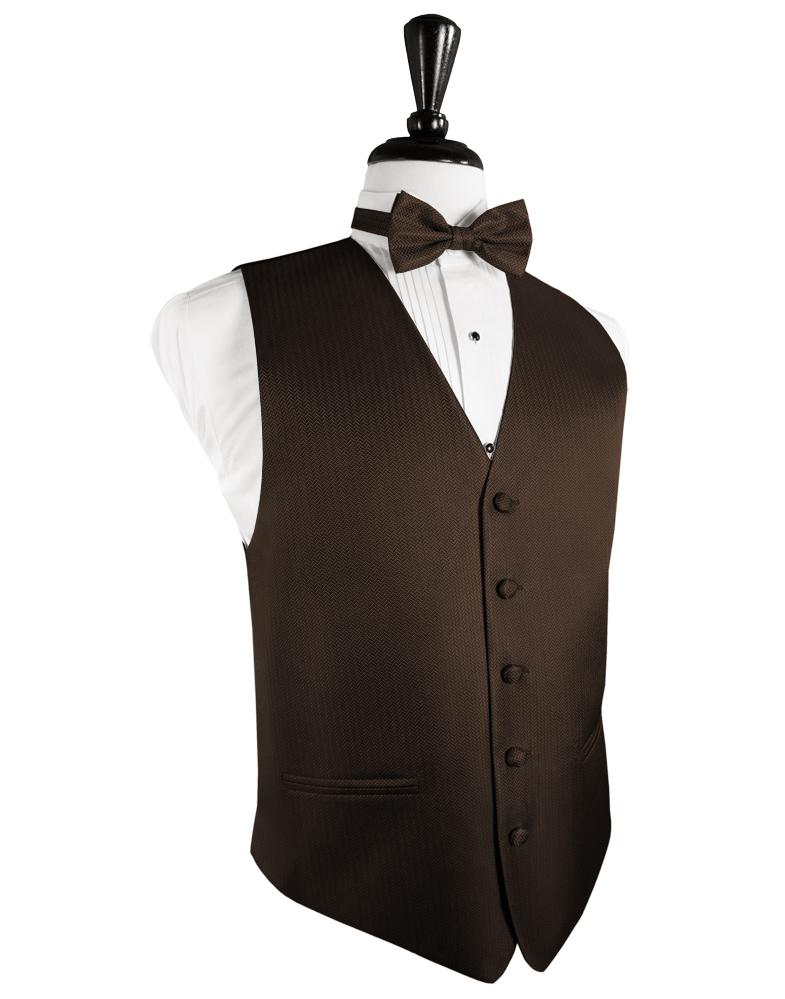
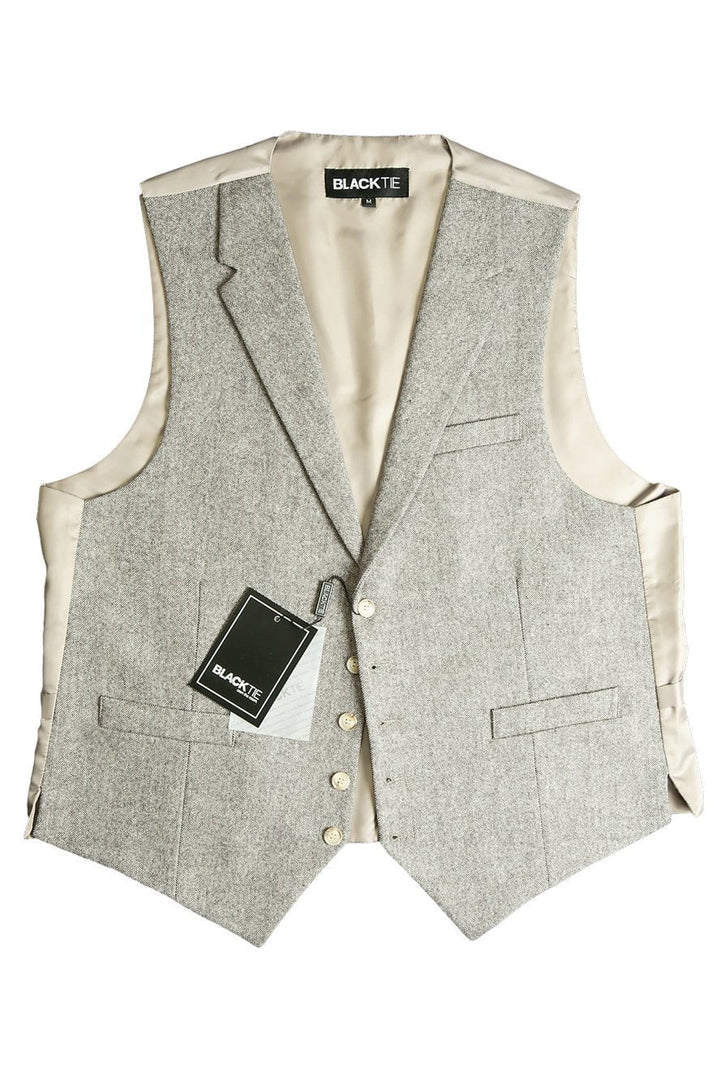
A tweed waistcoat, a smooth suiting vest, and a satin tuxedo vest are different styling tools. Tweed can suggest a more textured, tailored look; satin reflects light more strongly; patterned accessory fabrics add another layer of detail. Read the individual composition and care information before choosing.
Avoid treating every piece labeled formal as interchangeable. For a tuxedo-style outfit, the vest’s neckline and relationship to the shirt front matter. If a traditional black-tie appearance is required, confirm that the complete combination meets that expectation rather than assuming a colored accessory vest is always appropriate.
Fit Through the Torso and Waist
A vest should sit neatly without pronounced pulling between the buttons. Its length should cover the trouser waistband during ordinary movement, so try it with the trousers you will actually wear. A different trouser rise can change how the vest fits into the outfit.
Consult the product’s size chart and adjustment details, and use Find Your Fit for additional guidance. Check comfort while sitting as well as standing. A wedding or evening event often involves hours of wear, and an attractive color cannot make up for a waistcoat that feels restrictive or shifts awkwardly.
Coordinate Neckwear and the Shirt
A white shirt provides a clear contrast, while cream or pale blue can create a softer relationship with brown. Choose the shirt for the occasion and jacket first, then assess brown neckties or brown bow ties as appropriate.
The neckwear should remain in proportion to the vest opening and jacket lapels. A very large knot can crowd the neckline. A pocket square can repeat a small element of the palette without matching every fabric, especially when the vest already provides a visible pattern or shine.
Plan Group Outfits with Exact Specifications
For groomsmen or other coordinated groups, record the exact vest design, shade, and fabric. A request for brown vests alone can produce a mix of textures and undertones. Confirm sizes and availability before committing everyone to one style.
If the outfit is better served by a waist sash, explore brown cummerbunds as an alternative rather than wearing both waist coverings together. Before ordering, review the full combination with the jacket on and off. A successful vest should contribute to both versions of the outfit.
Questions to Settle Before Ordering
For brown, compare the warmth of the chosen shade with nearby tan, cream and darker accessories. These related neutrals can coordinate beautifully, but a deliberate difference in depth is often clearer than an accidental near-match between unrelated materials.
What should I check if the jacket will come off? Look at the vest’s back, adjuster and lining details in the product information, then try it over the shirt you will wear. The shirt should sit smoothly at the arm openings and waist without excessive bunching. View the outfit from the side and back as well as the front. This is particularly useful for receptions or performances where the vest may become the main visible garment for part of the occasion.
Should everyone in a group order the same size system? Use the selected vest’s own sizing guidance for each person. Do not translate a casual shirt size directly into a vest size without checking measurements, and do not assume different vest ranges fit identically. Keep the product style and size information together in the group’s order record. An adjustable feature can help refine fit within its intended range, but it should not be treated as a substitute for choosing an appropriate starting size.
Can a vest work with more than one jacket? A contrasting accessory vest may be useful with several outfits, while a suit-coordinate vest is designed around a more specific fabric relationship. Review its construction and intended use before planning additional combinations. Try it with the new trousers as well as the jacket, since waistband coverage can change. A versatile result still needs a coherent level of formality and a comfortable fit; matching a color alone does not establish either one.